
Field Display Types
“Display Types” determine how data is displayed on the PDF.
Display types can be different to the Data Types that you send in your API request.
For example, a boolean true or false value can be used to show or hide a check mark on the PDF.
Or if you set the display type to “Text”, the field could display the text “true” or “false” (or any other values you configure.)
Typeface (Font)
Section titled “Typeface (Font)”When you choose a “monospace” typeface for a single-line field, you can check Auto-calculate Max Length. DocSpring will then calculate the maximum number of characters that can fit in the field, and add it to the API schema as a validation.
Multiline
Section titled “Multiline”When “Multiline” is checked, the text will wrap across multiple lines. When unchecked, the text will be displayed as a single line.
When checked, the field is divided into equally spaced boxes, or “combs”, and one character is placed in each comb. You can configure the number of comb cells.
DocSpring will display the lines that divide each cell:
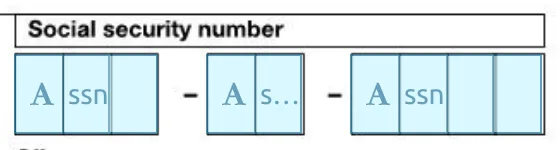
These lines can be useful when you’re not sure how many cells are in a field. For larger comb fields, continue incrementing the “Comb Cells” value until all of the lines match up.
Other Text Options
Section titled “Other Text Options”- Font Size
- Character Spacing
- Bold
- Uppercase
- Strikethrough
- Keep Leading Spaces: Keeps the spaces at the start of the text and at the start of each line, so you can line text up with spaces. Without it, those spaces are removed. Comb fields and editable fields always keep them. Right-to-left text (such as Hebrew or Arabic) doesn’t keep them.
- Color
- Background Color
- Opacity
- Horizontal Alignment: (Left, Center, Right)
- Vertical Alignment: (Bottom, Center, Top)
- Overflow: (Shrink to fit, Truncate). See Handle Truncated Text.
- Min Length and Max Length: Added to the API schema as validations.
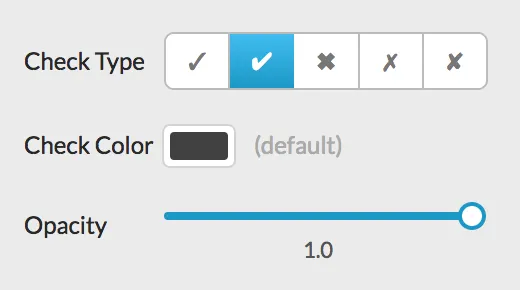
You can configure the check character, color, and opacity.
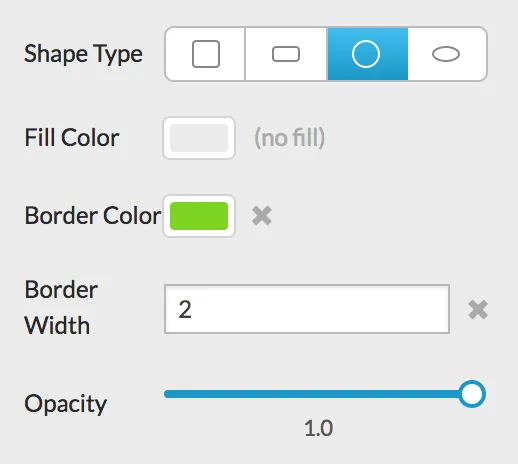
A shape can be a square, rectangle, circle, ellipse, triangle or polygon. A triangle points up, with its base along the bottom of the field. A polygon has 3 to 12 sides (6 by default, set with Sides) and a flat bottom edge. Triangles and polygons stretch to fill the field, as an ellipse is a stretched circle, and turn with the field’s rotation. Visual forms older than version 2.17.0 show them as rectangles.
You can configure a fill, border, or both. You can also configure the border width, and opacity.
With the API, set the field’s shapeType to triangle or polygon, and shapeSides to the number of sides of a
polygon.
In visual forms and signature requests, a shape that isn’t selected is shown faded, as an unselected check mark is: the PDF only draws the shapes whose value is true, or that match their Condition. Embedded visual forms show this from version 2.17.0.
Static Check Marks and Shapes
Section titled “Static Check Marks and Shapes”A Static check mark or shape is always added to the PDF, whatever its value or Condition. Use one for a mark that should appear on every PDF, such as a box that is always ticked.
To turn a static check mark or shape off without deleting it, check Hidden. It stays on the page in the template editor (shown faded), so you can turn it back on later.
Static Number fields are the exception. Their value can come from a formula, so they are only added to the PDF when the value matches their Condition.
Image Scaling
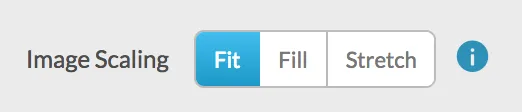
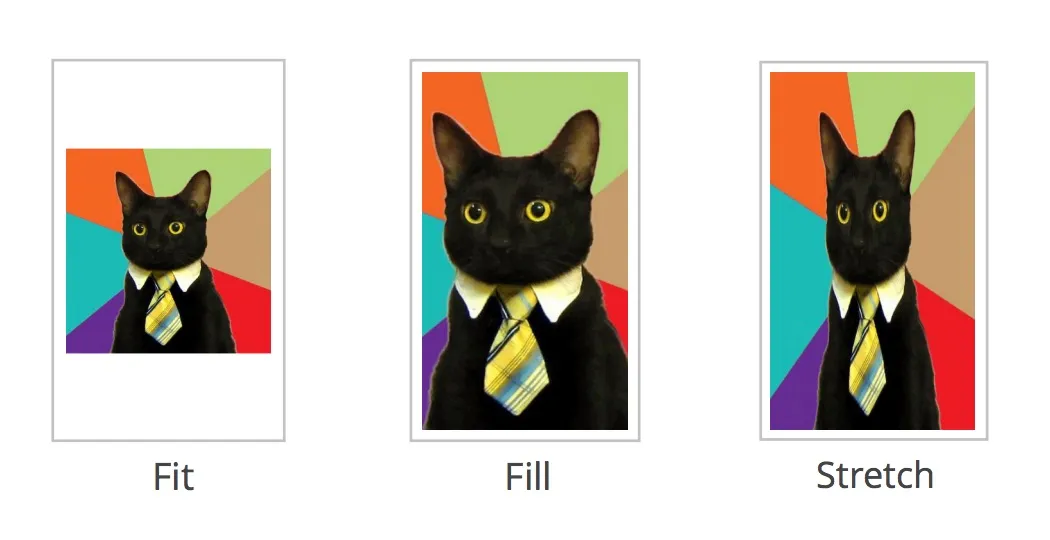
Section titled “Image Scaling”Images can be scaled to fit, scaled to fill, or stretched to fill the field dimensions.
Scale Gravity
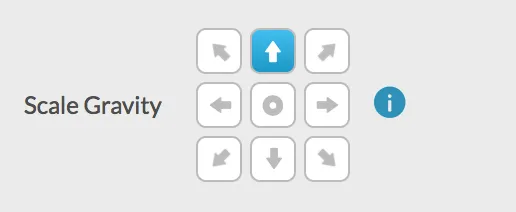
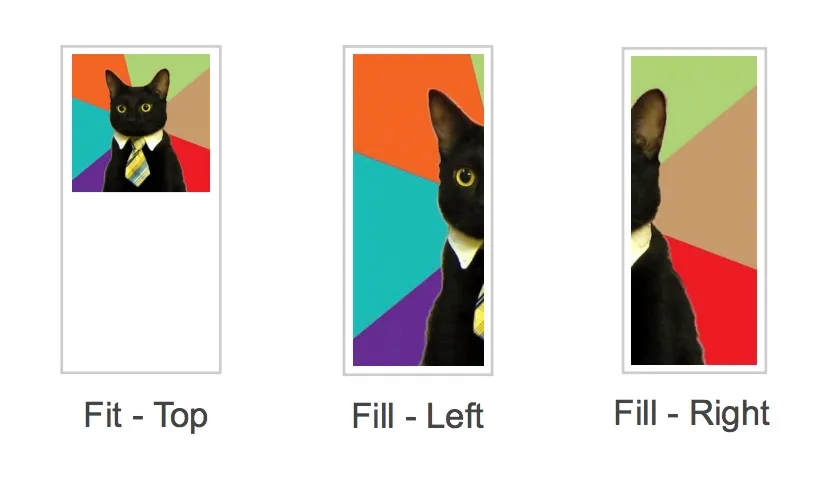
Section titled “Scale Gravity”When you choose “scale to fit” or “scale to fill”, you can configure the “gravity”. This lets you control the image position (for “fit”), or which part of the image is cropped (for “fill”).
See the Image Data Type section for information about images.
QR Code
Section titled “QR Code”Strings, Emails, and URLs can be displayed as QR Codes.

Barcode
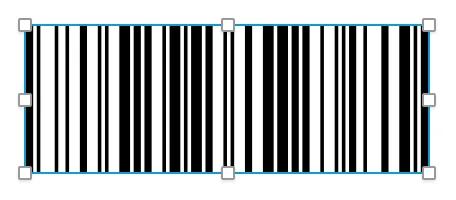
Section titled “Barcode”The following field data types can be displayed as barcodes: Barcode, String, Email, and URL.
Strings, Emails, and URLs use the Code 128 symbology, which supports any ASCII character.
Editable Fields
Section titled “Editable Fields”Text and Check fields have an Editable option in the field settings. When a field is editable, DocSpring includes an editable form field in the generated PDF instead of flattening it to static text. This lets you make some fields fillable while keeping the rest static.
See Editable PDFs for how the per-field option interacts with the submission editable option.